The work
Vented cylinders and the tanks that feed them
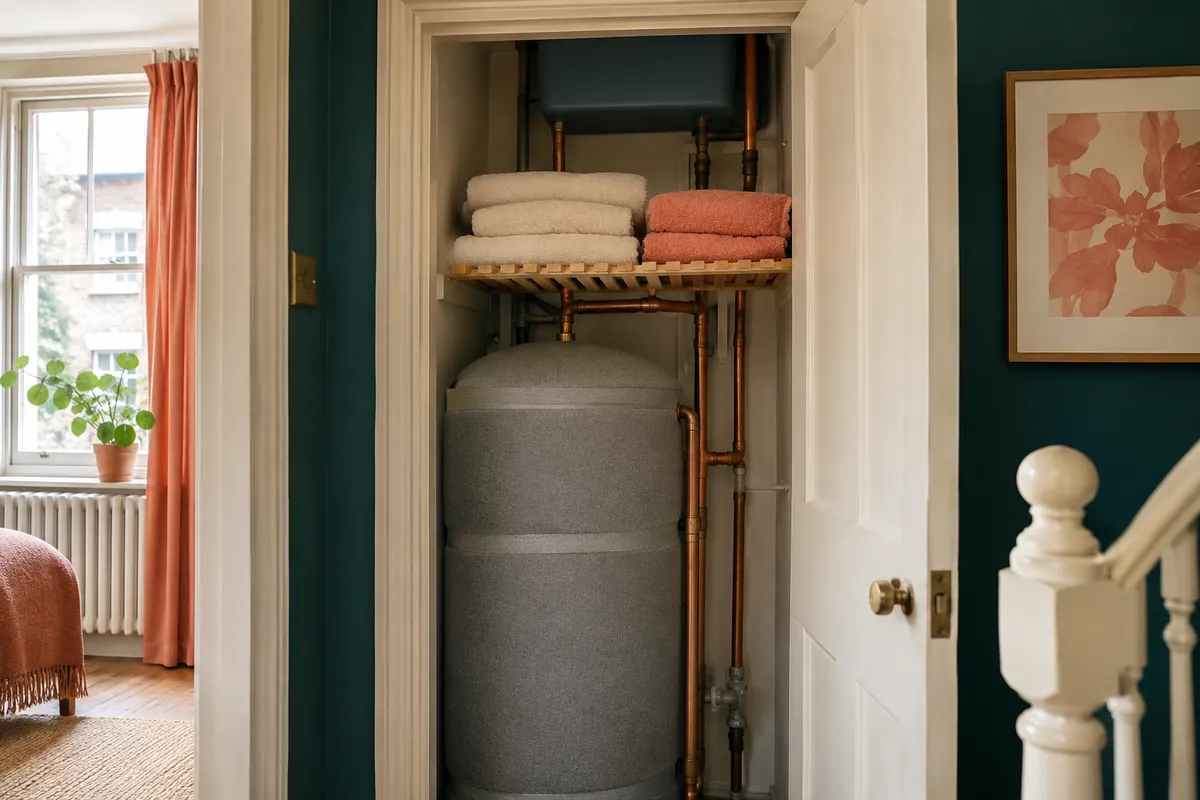
Treat the cylinder, its cold water cistern and the pipes between them as one system. Many weak-flow, overflow and temperature complaints involve more than the copper tank in the airing cupboard, so the quote should name each part it covers. Weekday plumbing labour on a vented system is £95 an hour, one hour minimum, before parts.
Recognising the system
A vented cylinder is usually fed from a cistern higher up and has an open vent pipe rising back over it. Pressure at the hot taps comes from that height. If your tank takes mains pressure directly and carries a discharge pipe, read about unvented cylinders instead.
Common requests
- Water around the base or at a connection.
- Hot water running out sooner than before.
- Weak hot flow, especially upstairs.
- A cistern overflowing or filling noisily.
- Water that is far too hot, or warm water in the cold tank.
- Replacing an old or uninsulated cylinder.
Water that is scalding, or discharging into the cistern, calls for the heat source to be switched off where safe and a prompt visit.
What to put in the quote
- Cylinder dimensions, capacity, coil type and insulation.
- Cistern condition, lid, insulation, float valve and overflow.
- Vent and cold feed pipework retained or renewed.
- Drain cock and isolating valves.
- Thermostats, motorised valve and immersion element.
- Access for old and new vessels, and disposal.
- Time without hot water.
Heat sources
A cylinder may be warmed by an immersion heater, a boiler coil, or both. Electrical connections need a competent electrical person. The boiler's gas side belongs to Gas Safe registered engineers alone, so look up your visitor's card on the Gas Safe Register. Cylinder specialists are available where the fault needs closer investigation.
Keeping or converting
Changing to an unvented cylinder or a combination boiler is a different project, with new demands on the mains supply, pipework and certification. Ask for it as its own option with its own exclusions. Older pipes and fittings may react differently to higher pressure, so ask how that is assessed. Conversion to unvented storage is for G3 qualified engineers only.
Building rules
Replacing hot water equipment can fall under hot water safety and energy efficiency requirements. The government publishes Approved Document G; ask whether notification applies to your job and who handles it.
The figures to expect on your quote
- Weekdays: £95 an hour, with one hour as the minimum.
- Evenings and weekends: from £140 an hour.
Booked in advance means no call-out fee. An emergency visit can be requested at any hour of any day: a weekday daytime visit costs the hourly rate plus a £60 call-out, and an evening or weekend visit costs from £140 an hour plus £60. Parts are charged on top after you approve them, VAT is not added, and a written quote costs nothing. Last checked 28 November 2026; see what you pay.
What to send
Pictures of the cylinder, labels, cistern, loft access and any staining, the cupboard measurements and how many people use the hot water. Say if the loft is boarded and lit.
Testing the result
Check hot taps for flow and temperature after reheating. Look into the cistern for a steady water level with nothing running down the vent. Inspect joints and the ceiling below the tank that day and later in the week.
Before agreeing extras, see the variation order template.
Questions people ask
Why is my cold tank water warm?
It can mean hot water is reaching the cistern from the system. Switch off the heat source where safe if water is scalding or discharging, and have it checked.
Is converting to an unvented cylinder a like-for-like swap?
No. It changes the demands on mains supply, pipework and certification, and is for G3 qualified engineers only.