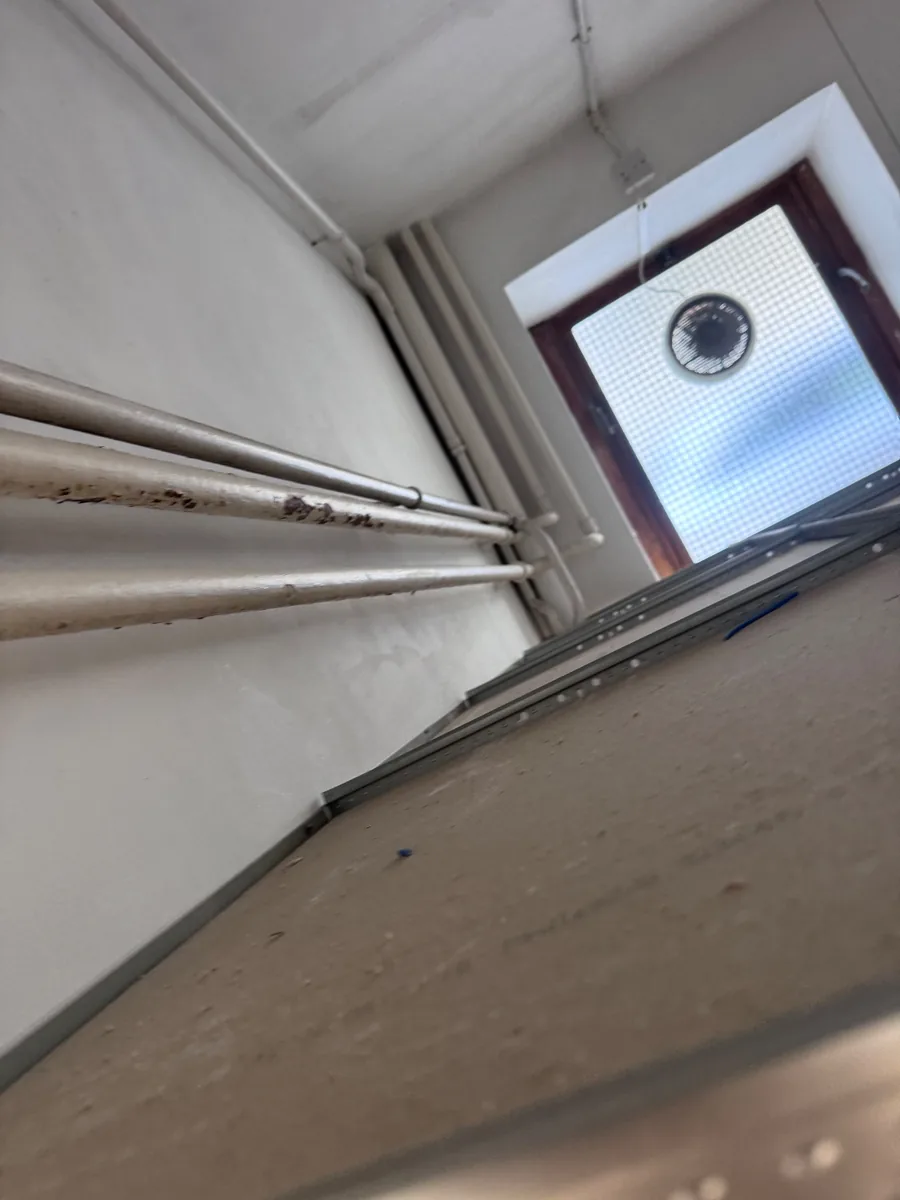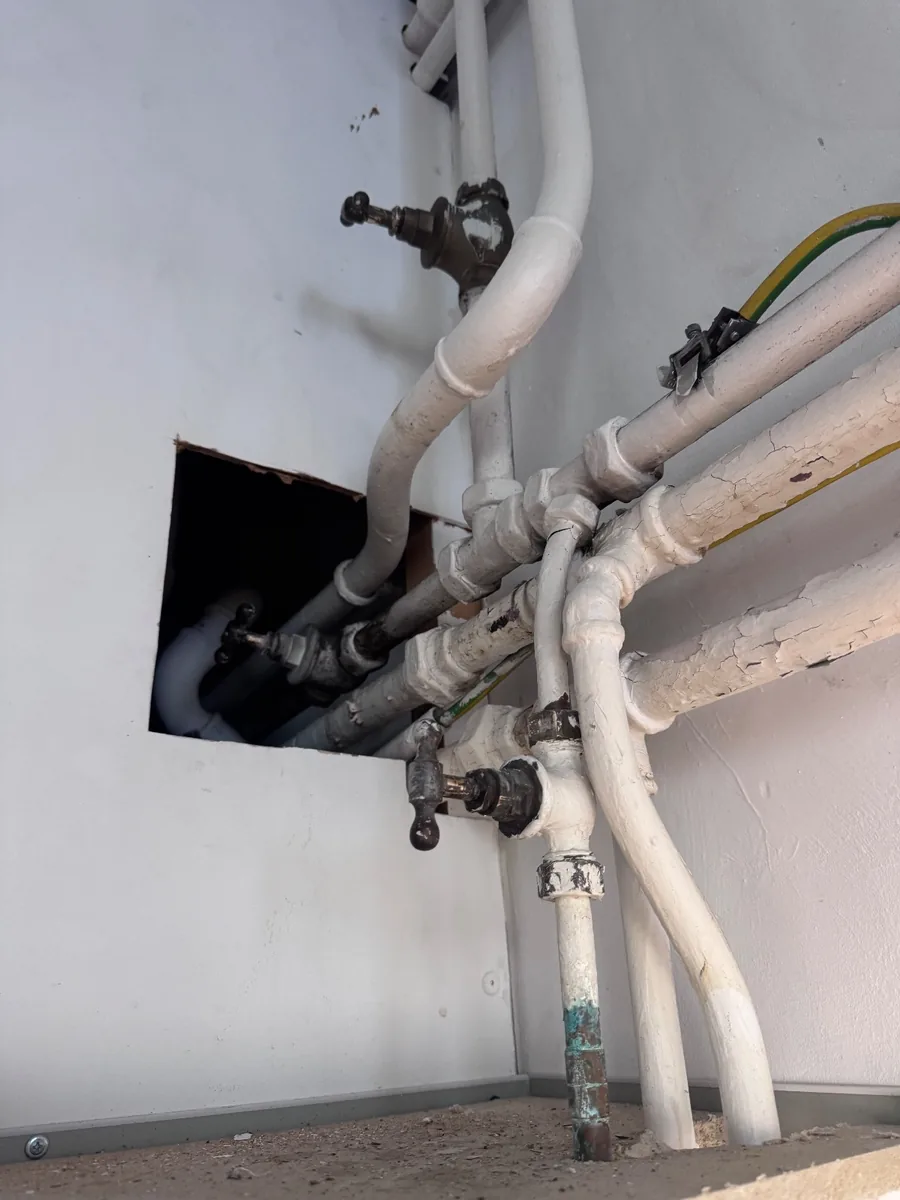
The work
Plumbing briefs for small business premises
A commercial quote has to fit around trading. State which facilities cannot go out of use, who can authorise work and what paperwork your landlord or insurer expects. Weekday labour at business premises is £95 an hour with a one hour minimum, and no VAT is added.
Typical subjects
Washroom fittings, sinks, drinks and catering water connections, leaks, valves, wastes and pipe alterations in shops, offices, studios and food businesses. Heating, boiler and hot water cylinder work can be described too. Commercial gas appliances need an engineer whose Gas Safe card covers that category, so say early if the site has plant rooms, calorifiers, catering equipment or process plant. Specialist fire systems are a separate trade.
Rules that differ from homes
If the premises are not a house, a change of material use, an extension or an alteration to the water system will generally need the water undertaker to be notified and to consent, although the regulations set out exceptions. Allow for that in the programme and name who submits it.
Discharges to sewer are controlled. Section 111 of the Water Industry Act 1991 forbids putting matter into a public sewer or drain that is likely to injure it or interfere with flow, which is relevant to fats and kitchen waste, and trade effluent may need the sewerage company's consent. Legionella is a further duty for employers and whoever controls the building.
Brief to send
- Business type, floor and trading hours.
- Fault or alteration, with photographs.
- Who else shares the supply or drainage.
- Landlord consent, permits to work, sign-in and risk assessment requirements.
- Preferred working windows.
- Purchase order process and invoice entity.
Write the brief in the form; photographs go separately to info@honestplumberlondon.co.uk.
What the quote should say
Scope and exclusions, shutdown periods, welfare facilities left available, site documents the contractor will provide, insurance evidence on request, waste handling, variation approval and payment terms. Do not assume out-of-hours attendance, certificates or method statements unless written.
Business customers do not have all the protections of the Consumer Rights Act, which concerns consumers, so the written terms carry more weight. Read them for liability limits and cancellation.
Phasing around use
If the premises stay open, ask for the work to be broken into stages, each ending with a usable washbasin and toilet where staff need them. State how noise, water on floors and access to customer areas will be controlled, and who tells neighbouring occupiers about a shared shut-off. Note any equipment that must be drained or restarted by its own service firm.
The figures to expect on your quote
- Weekdays: £95 an hour, with one hour as the minimum.
- Evenings and weekends: from £140 an hour.
Booked in advance means no call-out fee. An emergency visit can be requested at any hour of any day: a weekday daytime visit costs the hourly rate plus a £60 call-out, and an evening or weekend visit costs from £140 an hour plus £60. Parts are charged on top after you approve them, VAT is not added, and a written quote costs nothing. Last checked 28 November 2026; see what you pay.
Sign-off
Have a named person test fittings with the premises in normal use, check ceilings and rooms below, confirm valves are reopened and labelled, and collect records for the maintenance file. Note outstanding defects on the completion sheet with an agreed action. Check that invoice wording matches the order, including the site and reference, before it goes to accounts.
Related reading
Paperwork that tends to matter to a business includes how a quotation differs from an invoice, which receipts and invoices to keep, invoices that arrive late, disputing a bill in writing, a written scope of works, reading an insurance certificate and looking a company up on Companies House.
On cost and payment, see also VAT on a quote, parking and zone charges and safe bank transfers.
Questions people ask
Do business premises need to tell the water company about alterations?
As a general rule, yes: outside houses, altering or extending the water system needs the water company to be told and to agree beforehand. There are exceptions, some covering approved contractors.
Does the Consumer Rights Act cover a business customer?
Its protections are for consumers, so a business should rely on clear written terms and check liability limits and cancellation clauses.